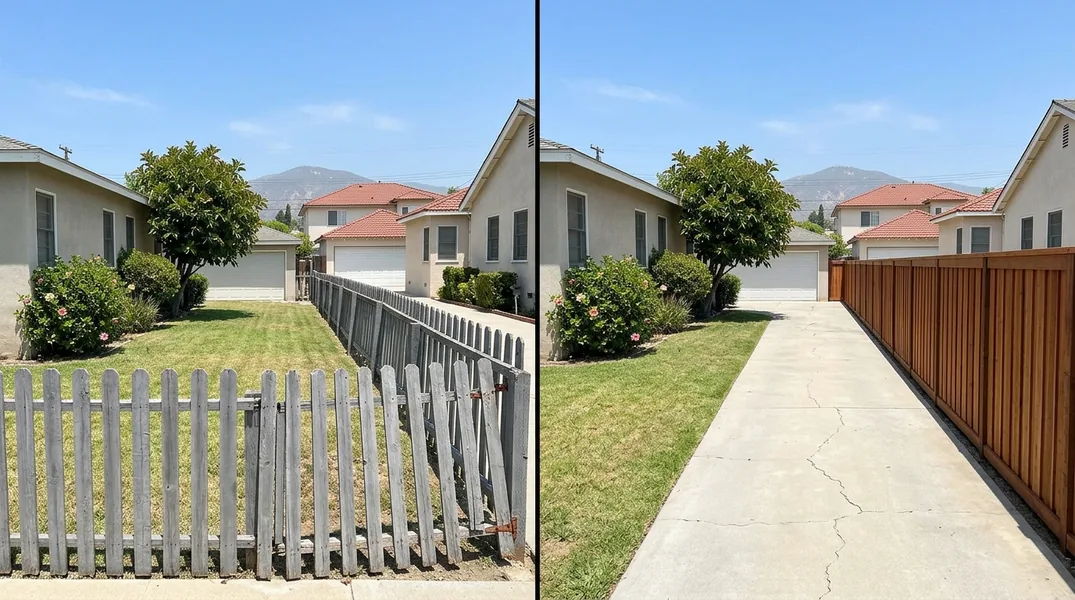
Understanding Your Fence Options in Long Beach's Coastal Climate
Living in Long Beach means dealing with unique environmental challenges that can make or break your fence investment. The combination of salt air, intense UV rays, and occasional moisture creates conditions that test even the most durable materials. When you're deciding between wood and vinyl for your next fence project, understanding how each material responds to our coastal climate is absolutely essential.
The Long Beach area sits just miles from the Pacific Ocean, which means salt spray can reach your property year-round. This salty air accelerates corrosion and degradation in ways that homeowners in inland areas never experience. Additionally, our Southern California sun is relentless, with over 280 days of sunshine annually. These environmental factors should heavily influence your decision when comparing vinyl vs wood fence options for your home.
How Wood Fences Perform in Salt Air and Sun
Wood & Privacy Fence Installation has been the traditional choice for homeowners seeking natural beauty and classic appeal. Wood offers warmth, character, and the ability to be stained or painted in virtually any color you desire. However, in Long Beach's harsh coastal environment, wood requires significantly more maintenance than many homeowners anticipate.
The salt air in our region accelerates wood rot and decay, particularly in the bottom rails and posts that are closest to the ground and most exposed to moisture. Even pressure-treated lumber, which is designed to resist rot, will deteriorate faster in coastal climates than it would inland. Additionally, the intense sun causes wood to fade, crack, and split over time. You'll need to repaint or restain your wood fence every 3 to 5 years to maintain its appearance and protect it from the elements. Without regular maintenance, a wood fence in Long Beach can look weathered and gray within just a few years, and structural integrity can become compromised.
The Case for Vinyl & PVC Fence Installation in Coastal Conditions
Vinyl & PVC Fence Installation has emerged as a popular alternative for homeowners seeking a best low maintenance fence option. Vinyl is engineered to resist the very challenges that plague wood in coastal environments. It doesn't rot, splinter, or attract termites, and it won't fade, crack, or split under UV exposure the way wood does.
In Long Beach's salt air environment, vinyl fences demonstrate remarkable resilience. The material is non-porous, which means salt spray and moisture cannot penetrate and cause degradation from within. Unlike wood, vinyl requires no painting, staining, or sealing. Routine cleaning with a garden hose or mild soap solution is typically all that's needed to keep your vinyl fence looking pristine. Many homeowners find that this low-maintenance characteristic alone justifies the initial investment, especially when they calculate the time and money saved on upkeep over the fence's lifespan.
Wood & Privacy Fence Installation Cost in Long Beach: What to Budget
When evaluating vinyl vs wood fence cost, the initial purchase price is just one part of the equation. Wood fencing typically has a lower upfront pricing compared to vinyl, which can make it attractive to budget-conscious homeowners. However, this lower initial cost doesn't tell the complete financial story, especially in a coastal climate like Long Beach.
Over a 20-year period, the total cost of ownership for a wood fence can significantly exceed that of vinyl when you factor in maintenance expenses. Professional repainting or restaining every few years, repair work from rot and weather damage, and potential post replacement all add up quickly. A wood fence that costs $3,000 to install might require $500 to $1,000 in maintenance annually in Long Beach's harsh climate. Vinyl fencing, while typically 20 to 40 percent more expensive initially, can cost half as much over its lifetime because maintenance is minimal. When you're making your decision, it's wise to consider the true total cost rather than just the installation price. For a detailed breakdown of current pricing for both materials, reach out to Long Beach Fence for a free estimate.
Durability and Longevity: Comparing the Materials Head to Head
Durability is where the difference between these materials becomes most apparent in Long Beach's environment. A well-maintained wood fence typically lasts 10 to 15 years in coastal conditions, though this timeline can be shorter if maintenance is neglected. Vinyl fences, by contrast, often last 20 to 30 years or more with minimal care. This extended lifespan means fewer replacements and less disruption to your property over time.
Wood's vulnerability to salt air, moisture, and UV damage means that structural problems can develop unexpectedly. Posts may rot from the inside out, making them unstable before you even realize there's an issue. Rails can warp and crack, creating gaps and safety concerns. Vinyl, being chemically inert, doesn't degrade in these ways. It maintains its structural integrity throughout its lifespan, and color fading, while it can occur with lower-quality vinyl, doesn't affect the material's strength or functionality. If durability and longevity are your primary concerns in Long Beach's coastal climate, vinyl consistently outperforms wood.
Aesthetics, Customization, and Finding the Best Fence Material for Your Home
The question of which is the best fence material isn't purely technical; it's also about what appeals to you aesthetically. Wood offers a natural, warm appearance that many homeowners find beautiful and timeless. It can be customized with various stains and paints, and it blends naturally with landscaping. If you love the look of natural wood and don't mind the maintenance commitment, wood can be the right choice for your Long Beach home.
Vinyl has made significant strides in appearance over the years. Modern vinyl fencing comes in numerous colors and styles, including options designed to mimic the look of wood. While some homeowners feel vinyl lacks the authentic character of real wood, others appreciate its clean, uniform appearance and the fact that it looks the same year after year. Vinyl also offers excellent privacy options, similar to what you'd get with traditional wood privacy fencing. Ultimately, the best fence material depends on balancing aesthetics with your willingness to maintain it. If you're torn between the two, Long Beach Fence can help you evaluate options that match both your style preferences and your lifestyle.
Making Your Decision: Wood vs Vinyl Fence for Long Beach Homes
Choosing between wood and vinyl fencing requires honest assessment of your priorities, budget, and commitment to maintenance. If you love the natural look of wood and enjoy regular upkeep, or if you're planning to sell your home in the near term, wood might be your answer. However, if you're looking for a best low maintenance fence that will look great for decades with minimal effort, vinyl is the superior choice for Long Beach's coastal climate.
The reality is that Long Beach's salt air and intense sun create an environment where vinyl simply performs better over the long term. The material was engineered specifically to withstand the conditions that break down wood fences. If you're ready to explore your options and find the perfect fence for your property, contact Long Beach Fence today at (562) 850-1083 or request a free estimate. Our team has extensive experience installing both Wood & Privacy Fence Installation and Vinyl & PVC Fence Installation in Long Beach, and we can help you make the decision that's right for your home and your needs.
Looking for a professional fence contractor in Long Beach? Long Beach Fence responds fast for all your fence needs.
Get a Free Quote