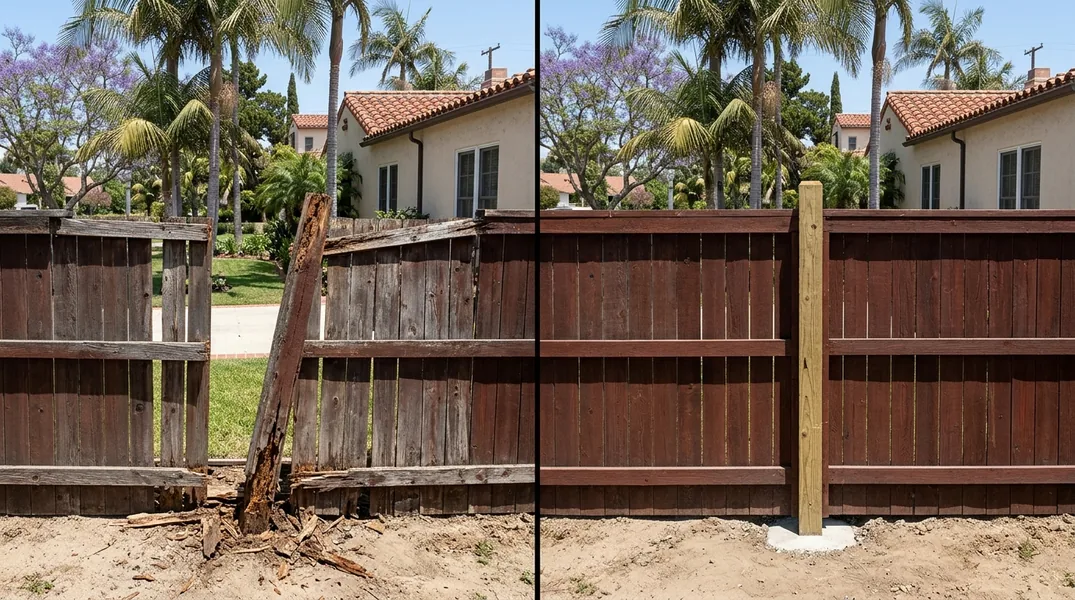
Understanding Why Your Long Beach Fence Is Leaning
If you've noticed your fence starting to tilt or lean in your Long Beach yard, you're not alone. Leaning fences are one of the most common problems homeowners face, and the causes often run deeper than simple age or wind damage. A leaning fence is typically a sign that something is compromising the structural integrity of your fence posts, the critical foundation that keeps your entire fence standing straight and strong.
The posts are the backbone of any fence system, whether you have a Wood & Privacy Fence Installation or another type of fencing. When posts begin to fail, the entire fence becomes unstable. Understanding the root causes of post failure is the first step toward getting your fence back in shape. In Long Beach, where we experience coastal humidity, temperature fluctuations, and occasional heavy rains, fence posts face unique environmental challenges that can accelerate deterioration.
Termite Damaged Fence Posts: A Silent Threat to Your Fence
Termites are one of the most destructive pests affecting wooden fences in Southern California. These small insects feed on cellulose, the main component of wood, and they can cause extensive damage without you even realizing it's happening. Wood & Privacy Fence Installation projects are particularly vulnerable because the posts are often partially buried in soil, creating the perfect environment for termite colonies to establish themselves.
When termites tunnel through your fence posts, they hollow out the interior wood while sometimes leaving the outer surface relatively intact. This means your fence may look fine on the outside while being severely compromised on the inside. As the internal structure weakens, the posts lose their load-bearing capacity and can no longer support the weight of the fence boards and panels. This is why you might suddenly notice your fence leaning or sagging, even if it seemed fine just weeks earlier. Termite damage progresses quickly once an infestation takes hold, so early detection is crucial.
If you suspect termite damage in your fence posts, it's important to act fast. A professional inspection can determine the extent of the infestation and whether your posts can be repaired or need complete replacement. Delaying treatment can result in the entire fence becoming unsafe and unusable.
Rotted Fence Post Repair: Addressing Moisture and Decay
Fence post rot is another leading cause of leaning fences throughout Long Beach and the surrounding areas. Unlike termite damage, which is caused by pests, rot develops when wood is exposed to excessive moisture over extended periods. Wood naturally absorbs water, and when that moisture remains trapped in the fibers, it creates conditions where fungi and decay organisms can thrive. The wood gradually loses its structural strength as the decay progresses, eventually becoming soft, spongy, and unable to support the fence.
One common cause of rotted fence posts is poor drainage around the base of the fence. If water pools near your fence line or if sprinkler systems are positioned too close to the posts, the constant moisture exposure accelerates rot. Many homeowners don't realize that their irrigation system is slowly destroying their fence posts. Sprinkler rot, as it's commonly called, happens gradually but relentlessly. The posts become waterlogged, fungi colonize the wet wood, and before long, you have a serious structural problem on your hands.
Another contributing factor is the quality of the wood treatment applied during installation. Posts that aren't properly pressure-treated or sealed are far more susceptible to rot. Additionally, posts installed directly in concrete footings without adequate drainage can trap moisture against the wood surface, leading to accelerated decay. Professional fence post repair services can assess whether a rotted post can be salvaged with treatment and reinforcement, or whether replacement is necessary to restore your fence's stability.
How Shifting Soil Causes Fence Posts to Lean and Settle
The soil beneath your fence plays a surprisingly important role in keeping your fence upright. When soil shifts, settles unevenly, or becomes unstable, fence posts can gradually tilt out of plumb. This is particularly common in areas with clay soil, which expands when wet and contracts when dry. These expansion and contraction cycles create movement in the ground, which can destabilize posts that were set years earlier.
In coastal areas like Long Beach, soil composition can vary significantly from property to property. Some yards have sandy soil that drains quickly but offers less stability, while others have clay-heavy soil that holds moisture and shifts more dramatically with seasonal changes. Heavy rains, which we do experience during winter months, can saturate the soil and cause it to shift under the weight of the fence. Similarly, drought conditions cause soil to contract and pull away from the posts, leaving them less stable.
Improper post installation depth can amplify soil-related problems. Posts that aren't set deep enough in the ground don't have adequate anchorage to resist shifting soil. Professional installers know the proper depth requirements for your specific soil type and climate conditions. If your fence is leaning due to soil movement, a fence specialist can evaluate whether the posts can be re-set deeper, reinforced, or if replacement is the best solution to ensure long-term stability.
Leaning Fence Repair: When to Call a Professional
A leaning fence isn't just an aesthetic problem, it's a safety concern. A fence that's tilting or unstable can collapse, especially during high winds or if someone leans against it. Determining whether your fence can be repaired or needs replacement depends on several factors, including the severity of the lean, the age of the fence, and the underlying cause of the problem.
Minor leans caused by a single compromised post might be repairable by replacing just that post or reinforcing it with additional support. However, if multiple posts are affected or if the lean is severe, a more comprehensive solution may be necessary. This is where professional assessment becomes invaluable. A qualified fence contractor can inspect your posts, identify the root cause of the problem, and recommend the most cost-effective repair strategy.
If you're dealing with a leaning fence in Long Beach, don't wait until the problem worsens. Contact Long Beach Fence at (562) 850-1083 to schedule a free estimate. Our team has the expertise to diagnose the cause of your fence problems and provide reliable solutions that restore both safety and appearance to your property.
Prevention Tips: Protecting Your Fence Posts from Future Damage
While some fence problems are inevitable due to age and environmental factors, there are proactive steps you can take to extend the life of your fence posts and prevent costly repairs down the road. First, ensure your landscape drainage is working properly. Water should flow away from your fence line, not toward it. If you have sprinkler systems, position them carefully to avoid directing water at the base of your posts. Check your irrigation setup regularly and adjust sprinkler heads as needed to keep moisture away from the fence.
Regular maintenance is also critical. Inspect your fence at least twice a year, looking for signs of rot, pest damage, or unusual leaning. Catch problems early, and they're far less expensive and invasive to fix. If you notice soft spots in the wood, visible pest damage, or any posts that seem unstable, contact a professional immediately. Applying a quality wood sealant or stain every few years can also help protect your posts from moisture and UV damage, especially important for wooden fences in our coastal climate.
When it comes time to replace or install new fencing, invest in quality materials and professional installation. Properly treated posts, correct installation depth, and good drainage design make a significant difference in how long your fence will stand strong. Whether you're considering Wood & Privacy Fence Installation or exploring other fencing options, choosing a reputable local contractor ensures your fence is built to last.
Looking for a professional fence contractor in Long Beach? Long Beach Fence responds fast for all your fence needs.
Get a Free Quote