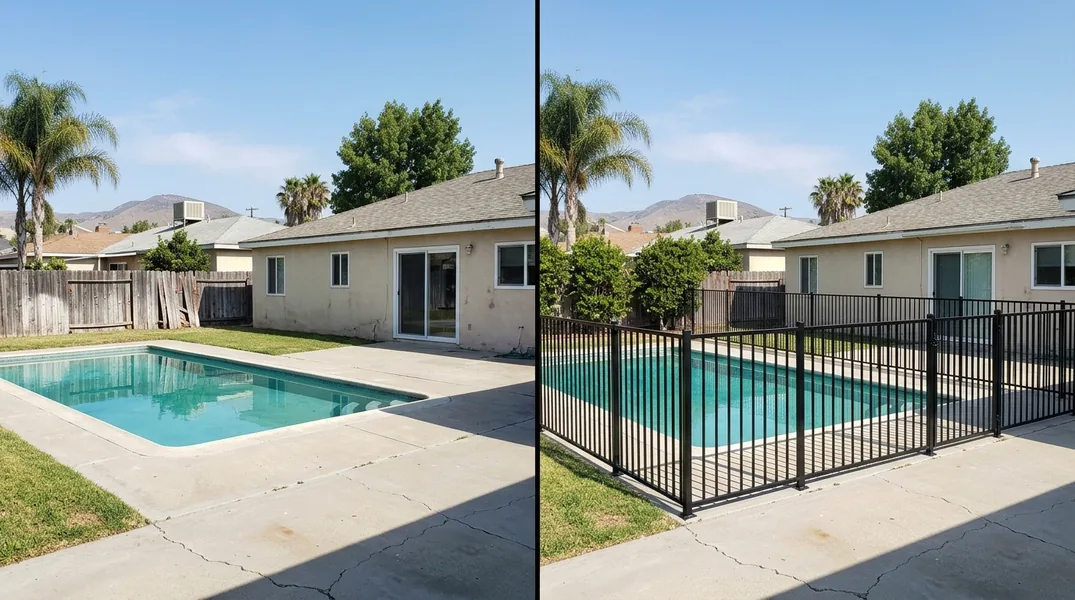
Understanding California Pool Fence Code Requirements
If you own a swimming pool in Long Beach, California state law requires you to install a barrier fence around it. This isn't optional, and it isn't just a recommendation from your homeowners association. Pool fence code requirements in California are legally mandated safety measures designed to prevent accidental drowning, particularly among young children. The California Building Code, which aligns with the International Swimming Pool and Spa Code, establishes strict guidelines that all pool owners must follow.
The primary purpose of these regulations is to create a complete barrier that prevents unsupervised access to the water. Whether you're installing a new pool or upgrading an existing fence, understanding these requirements will help you avoid costly violations, fines, and potential liability issues. Contact Long Beach Fence today for a free estimate to ensure your pool barrier meets all current California standards and local Long Beach ordinances.
Pool Fence Height Requirements: What You Need to Know
One of the most important pool fence code requirements is the height specification. In California, your pool fence must be at least four feet tall, measured from the ground level on the pool side of the fence. This four-foot minimum is not arbitrary; it's based on extensive safety research and is designed to prevent children from easily climbing over or reaching into the pool area. Many homeowners assume that a standard residential fence height will suffice, but if your existing fence is shorter than four feet, you'll need to upgrade it to comply with state law.
The height measurement is critical and often misunderstood by homeowners. The four feet must be measured vertically from the finished ground level directly below the fence line on the pool side. If your yard slopes, this can affect how the measurement is taken. Additionally, the fence must not have gaps larger than four inches at ground level, and horizontal members (like rails) must be spaced no more than four inches apart to prevent a child's head from becoming trapped. When considering Wood & Privacy Fence Installation for your pool area, work with experienced professionals who understand these precise requirements.
Self Closing Pool Gate Requirements and Installation Standards
Your pool fence is only as secure as its gate, which is why California has specific regulations for self closing pool gates. Any gate in your pool barrier must be self-closing and self-latching, with the latch positioned at least 54 inches above the ground. This height requirement ensures that small children cannot easily reach and operate the latch. The gate must close and latch automatically after someone passes through it, without requiring manual intervention. This automatic feature is essential because it removes the possibility of human error, such as forgetting to close or latch the gate after entering the pool area.
The self closing mechanism must function reliably in all weather conditions, and the spring or closing device must be strong enough to overcome any friction from the gate's weight. Many homeowners don't realize that a gate that simply swings closed isn't sufficient; it must also latch securely. If you have multiple gates providing access to your pool, each one must meet these standards. When you're planning your pool area security, understanding that a self closing pool gate is a non-negotiable safety feature will help you make informed decisions about your installation. Long Beach Fence can help you select and install gates that meet all California requirements while complementing your property's aesthetic.
Additional Barriers and Exemptions You Should Know
While a perimeter fence is the most common pool barrier, California law recognizes other approved safety measures. If your home's walls form part of the pool barrier, those walls must still meet the four-foot height requirement and cannot have doors or windows that open directly into the pool area unless they have self-closing, self-latching mechanisms. Some homeowners use removable pool covers or isolation fencing around individual pools as alternative or supplementary barriers, but these must meet specific safety standards and may not be suitable as standalone solutions depending on your pool's configuration.
It's important to note that Long Beach may have additional local ordinances beyond the state requirements, so checking with your city's building department is essential. Some jurisdictions require permits before installation, and inspections after completion to verify compliance. Exemptions to certain requirements are rare and typically apply only to specific situations, such as pools used exclusively for therapeutic purposes. The safest approach is to assume that your pool requires a fully compliant four-foot fence with self-closing gates, and then verify any potential exemptions with local authorities.
Choosing the Right Fence Material for Your Pool Area
When selecting a fence for your pool, you have several material options, each with advantages and disadvantages. Wood & Privacy Fence Installation offers a classic, attractive appearance and provides complete privacy. However, wood requires regular maintenance in the pool environment due to moisture exposure, chemical splash, and salt air if you're near the coast. Vinyl & PVC Fence Installation is increasingly popular for pool areas because it resists moisture, chemicals, and requires minimal maintenance. Vinyl maintains its appearance over time and doesn't need staining or sealing like wood.
Chain Link Fence Installation is another practical option that meets all code requirements while offering excellent visibility into and out of the pool area. Many homeowners appreciate that chain link allows you to see the pool from outside the fence, which can be a safety advantage. For a more upscale appearance, Aluminum & Ornamental Iron Fencing provides durability and aesthetic appeal. Whatever material you choose, ensure it meets the height and spacing requirements outlined in California code. Your choice should balance safety compliance, maintenance requirements, climate resistance, and your personal aesthetic preferences.
Getting Your Pool Fence Installation Done Right: Next Steps
Installing a compliant pool fence isn't a DIY project for most homeowners. The precise measurements, material selection, gate installation, and local permit requirements make professional installation the safest choice. When you hire an experienced fence contractor in Long Beach, you gain access to expertise in current code requirements, local permitting processes, and quality installation that will protect your family and your investment.
Long Beach Fence has years of experience installing pool barriers that meet California requirements and exceed homeowner expectations. Our team understands the specific challenges of pool fence installation, from ensuring precise height measurements to installing self-closing gates that function reliably. We handle the entire process, including helping you navigate local permits and scheduling inspections. Call us today at (562) 850-1083 or contact us for a free estimate. We'll assess your pool area, discuss your options, provide transparent pricing, and ensure your new fence meets all California pool fence code requirements while enhancing your property's value and safety.
Looking for a professional fence contractor in Long Beach? Long Beach Fence responds fast for all your fence needs.
Get a Free Quote